


For Amisai Arevalo, the son of a fishing family and an advocate for the fishers of Chunox, a small village that sits along a turbid coastal lagoon in northern Belize, the impacts of the Belize Blue Bonds project launched in 2021 are personal. The families in his community rely on a healthy ocean for their livelihoods. Along with others across Belize, they are playing an important role in protecting it and informing decisions about the future.
“The ocean for me, it’s very important,” says Arevalo. “As a fishing community, a coastal community and a coastal country, it’s very important.…All the economy that surrounds the village and all the economy that is in the village depends on the sea.”
The Belize Blue Bonds for Ocean Conservation project was the largest debt conversion for marine protection ever coordinated when it was launched five years ago. With the help of The Nature Conservancy (TNC) and other partners, Belize purchased back a quarter of its national debt from bondholders at a 45% discount. The savings were set aside for the protection of Belize’s coasts, reefs and marine systems.
Conservation success now depends on the collaborative work of Belize’s government, nonprofit organizations, businesses and local communities like Chunox to develop strategies that protect and restore ocean resources such as coastal fisheries, strengthen co-management efforts and support the livelihoods and well-being of the people who depend on the ocean.
“The voices of the fishers are being heard,” says Arevalo. “Because of the Blue Bonds agreement, now I see park managers, organizations who come more to the community and involve us in what happens in the management of the ocean.”
Life Shaped by the Sea
Coastal communities in Belize are integrally connected to the ocean. Children learn to swim at a young age. Families gather on beaches to spend time with each other. Sons grow up fishing with their fathers. The ocean does not just feed families but also serves as the backbone of local economies.
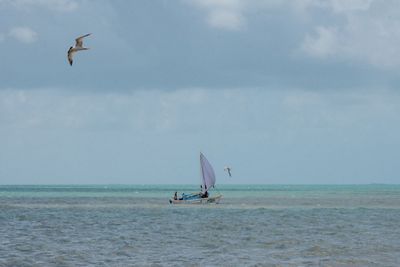
For many fishers, there also is an emotional connection.
“The sunrise, the sunset, getting a good catch,” says Carlos Arevalo, who chairs the Chunox Fishermen Association and is Amisai’s father and who has spent his life fishing the local waters. “All those things make you stay in love with the blue.”
But climate change, pollution, fishing pressures, coastal development and other human activities put a strain on marine ecosystems and in turn the livelihoods of fishing communities and others. These challenges underscore the need for sustainable management that balances nature and livelihoods.
The members of the Chunox Fishermen Association, who live on the coast of northern Belize and fish in the waters around the Turneffe Atoll, are trying to find a balance.
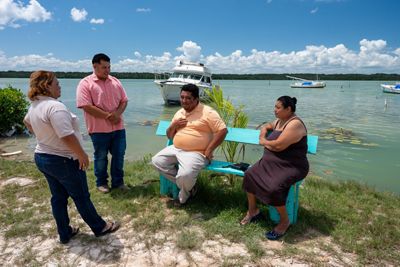
With the support of a $40,000 (USD) grant, the Chunox Fishermen Association is working to support sustainable fisheries and find ways to bolster the economic health of their community. The grant was from the independent conservation trust fund established to manage and allocate the funds unlocked by the Blue Bonds project, the Belize Fund for a Sustainable Future (Belize Fund).
“A new generation is coming,” says Carlos Arevalo, “and we need to have a sustainable fishing ground for our community, this community, to be alive.”
The association’s approach is multifold. They are working to build capacity by training leaders in their association, many of whom did not go to high school, to know how to speak with government, writing letters to advocate for the effective management of marine protected areas and applying for grants.
“Without good leaders, we cannot guide the rest of our members,” says Carlos Arevalo.
Members have also engaged in the national dialogue about the location of the new biodiversity protection zones established through the national marine spatial planning process known locally as the Belize Sustainable Ocean Plan (BSOP), which will ultimately bring the protection of Belize’s ocean up to 30%.
“We need a plan, something on paper that will say how we’ll manage our resources,” says Amisai Arevalo, who joined stakeholder meetings to represent Chunox’s needs and vision for the future and then bring information back to the fishermen’s association. “We have finite resources, and we need to know how we will use them, how we will protect them.”
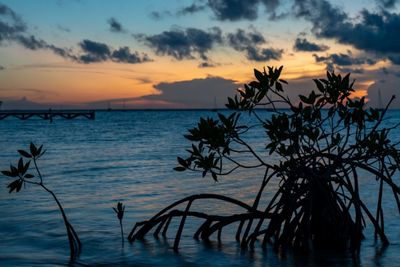
The grant also helped association members train in financial, data-collection and business management skills that help improve resilience, especially when conch quotas are met early and fishers cannot fish until the season opens again. Data on fish populations and threats in their fishing grounds help fishers collaborate with co-managers and others. Catch records can also help fishers qualify for loans to support businesses and their families.
“It’s the fishers who are 24-7 out there. They’re the ones who really are on the ground,” says Amisai Arevalo. “They know the sea. They know even which rock, which patch of reef has a lot of fish production and which reefs don’t. Nobody is better to protect the resources than the ones who use the resources.”
Co-managing for Sustainable Ecosystems and Local Livelihoods
Thirty kilometers east of Chunox, the fishing village of Sarteneja sits adjacent to the Corozal Bay Wildlife Sanctuary, Belize’s second-largest marine protected area and a vital refuge for marine life like endangered manatees and other species of the northern estuary. The sanctuary’s co-manager, a nonprofit organization called the Sarteneja Alliance for Conservation and Development (SACD), works with the government and the local community to ensure the marine area is effectively managed.
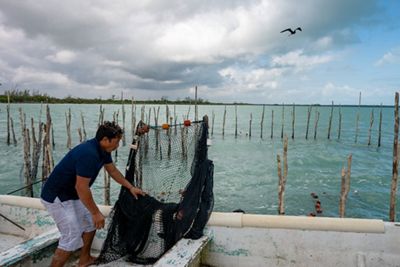
A $175,000 (USD) grant from the Belize Fund is helping SACD with monitoring wildlife, the management of the sanctuary and continued sustainable access for traditional livelihoods.
“SACD’s success is built on collaboration and relationships,” says Joel Verde, the executive director of SACD and a former fisher and tour guide. “We are working with the local fishers who practice beach trap fishing. Their voices and their decisions are being respected, and that relationship is mutual.”
While extractive activities are prohibited in the sanctuary, a small number of fishers are allowed to continue the traditional practice of beach trap fishing in a sustainable way. This technique involves catching fish swimming along the coast, which are guided by a tail-like fence extending from the beach into a heart shaped enclosure. Fish species that are too small or protected under fisheries regulations can be simply tossed back into the ocean.
In addition to protecting the wildlife sanctuary, SACD looks out for the beach trap fishers’ interests, says Abisai Canul, who fishes at several beach traps a short boat ride from the village. If someone wants to build a pier or develop a hotel, which would involve clearing the mangroves that line the coast and losing critical nurseries for the young fish that replenish the populations local fishers rely on for their catch, SACD will meet with fishers and then negotiate on their behalf.
Members have also engaged in the national dialogue about the location of the new biodiversity protection zones established through the national marine spatial planning process known locally as the Belize Sustainable Ocean Plan (BSOP), which will ultimately bring the protection of Belize’s ocean up to 30%.
“We need a plan, something on paper that will say how we’ll manage our resources,” says Amisai Arevalo, who joined stakeholder meetings to represent Chunox’s needs and vision for the future and then bring information back to the fishermen’s association. “We have finite resources, and we need to know how we will use them, how we will protect them.”
The grant also helped association members train in financial, data-collection and business management skills that help improve resilience, especially when conch quotas are met early and fishers cannot fish until the season opens again. Data on fish populations and threats in their fishing grounds help fishers collaborate with co-managers and others. Catch records can also help fishers qualify for loans to support businesses and their families.
“It’s the fishers who are 24-7 out there. They’re the ones who really are on the ground,” says Amisai Arevalo. “They know the sea. They know even which rock, which patch of reef has a lot of fish production and which reefs don’t. Nobody is better to protect the resources than the ones who use the resources.”


